
Chemistry

Meet the New Editors-in-Chief of Sustainability & Circularity NOW

Prof. Vania Gomes Zuin Zeidler

Prof. Vania Gomes Zuin Zeidler

is a W3 Professor at the Institute of Sustainable Chemistry, Leuphana University Lüneburg. Her research focuses on green chemistry, sustainable extraction, biorefineries, and analytical chemistry. She is a Fellow of the Royal Society of Chemistry and has received several international awards, including the ACS-CEI Award and IUPAC’s CHEMRAWN VII Prize. Prof. Zuin Zeidler has an extensive publication record and is a strong advocate for sustainable science education. She maintains close academic ties with UFSCar in Brazil and actively contributes to international collaborations in green and sustainable chemistry.
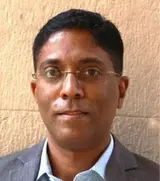
Prof. Anant Kapdi

Prof. Anant Kapdi

is a Professor of Chemistry specializing in synthesis and catalysis. His research focuses on sustainable catalytic systems, organometallic chemistry, and water-soluble ligand design. He has published over 130 research articles and reviews in leading international journals and has edited four books. His group developed the highly water-soluble phosphine ligand PTABS (KapdiPhos), now commercialized internationally, along with other widely applied catalytic systems. He serves as Associate Editor of Sustainability & Circularity Now and previously of RSC Advances. Prof. Kapdi is a Fellow of the Royal Society of Chemistry and recipient of numerous international honors, including the Alexander von Humboldt Fellowship, the RSC Best Teacher Award, and the Thieme Chemistry Journal Award.

9 Questions for...

Prof. Vania Gomes Zuin Zeidler and Prof. Anant Kapdi

What motivated you to take on the role of Editor-in-Chief of Sustainability and Circularity NOW at this stage of your career?

Vania: The opportunity to contribute to our field and promote access to cutting-edge knowledge in an emerging area as circularity connected to sustainability, with excellence, based on my experience in various professional contexts and sectors.

Anant: The challenge of leading a journal and creating a conducive environment for the talented SusCircNow team to excel. It also means that I will have to draw upon all my past experiences to bring contributions from academia, industry, and key governmental organizations that are working actively to promote sustainability and circular economy.

What is your vision for the future of Sustainability & Circularity NOW and the role it can play in advancing sustainable and circular chemistry?

Vania: My vision - shared by my colleagues - is to establish common goals across various fronts through effective communication in the form of articles that will actually be read, with a particular focus on cutting-edge research that can be put into practice, as well as education, policy, and regulation, in order to shape a more sustainable future for everyone.

Anant: The name, Sustainability and Circularity Now, very clearly defines the importance of both these words to the world in the current scenario, while it will become all the more crucial in the coming future too. The vision, therefore, would be to reach every corner of the world to portray fascinating science related to sustainability and circularity. The journal will also strive hard to provide a common platform to academicians and industrial chemists to share their cutting-edge research/case studies in sustainable and circular chemistry, as well as policymakers, to discuss policies that could help promote the idea of sustainability.  

Which emerging areas in sustainable and circular chemistry do you believe will shape the field over the next decade?

Vania: I would say that all areas related to renewable yet sustainable resources—including raw materials, intermediate materials, and end products - as well as the appropriate technologies for such resources. Other areas would also relate to finite resources and new ways to ensure their circularity, in a sustainable manner too. Education, digitalization, and regulation are also fundamental aspects for the present and future.

Anant: The world is currently facing serious problems due to the incessant consumption of fossil fuels, unprecedented environmental changes due to the increased CO2 concentration in the atmosphere, and depleted clean water sources due to the increased contamination of the water bodies. Accordingly, the areas that will drive the sustainable and circular chemistry goal in the world and influence academic/industrial research, and governmental policy making are:

  • Biomass-derived platform chemical technologies
  • CO2 capture and utilization technologies
  • Advanced water purification technologies
  • Artificial Intelligence for deriving improved chemical processes for achieving sustainable industrial solutions

What makes Sustainability and Circularity NOW unique among journals in sustainable chemistry?

Vania: Its scientific approach and interdisciplinary nature, combined with the desire to make SCNow a real platform where we can find inspiration and concrete examples to help us build a network grounded in meaningful, relevant, and excellent RD&I and applications - that leads to a more sustainable future.

Anant: Sustainability and Circularity are no longer distinguishable from each other and together form the basis of the current and future development that is going to take place around the world. SusCircNow promotes both these in equal measure rather than distinguishing them and recognizes their profound interconnection.

How can Sustainability and Circularity NOW contribute to accelerating the transition toward sustainable and circular chemical systems?

Vania: Providing opportunities for the publication of excellent scientific works that can bring innovation to the field, thereby playing a formative and constitutive role in it on a continuous basis.

Anant: With it’s wide array of special issues on topics related to sustainable and circular chemical systems, enabling the collection of the latest scientific developments and protocols to be readily accessed through the open access channel of SusCircNow, can be a game changer, promoting the accelerated transition from the traditional methods.

Why should researchers working in sustainable and circular chemistry consider submitting their work to Sustainability and Circularity NOW?

Vania: Researchers working in our field should bear in mind that we are already shaping the circular and more sustainable future we need on a global scale, and that their articles published in SCNow embody this effort by serving as a platform where researchers, students, and professionals in general can come together. 

Anant: A talented team of EICs, associate editors who are well-known in the field of sustainability and circularity, can very well appreciate the specific scientific contributions coming from the diverse audience, and do justice to the submitted manuscripts by identifying appropriate reviewers. Another option that is unique to SusCircNow is the Crowd Reviewing, which provides a rapid assessment of manuscripts by the scientific crowd compiled specially by SusCircNow team. Promotion of the published work of authors through different social media channels, as well as encouraging early-career researchers (contributors) to present their work by providing them with a global platform (Cheminars).

Sustainability challenges require collaboration across disciplines. How do you see the journal supporting dialogue between academia, industry and policy?

Vania:  The journal aims to bring together an audience from all sectors and fields related to circularity and sustainability; to achieve this, we need to draw on expertise from the fields of chemistry and engineering, as well as, for example, the humanities, biological, and medical sciences. This is because a topic studied using an interdisciplinary and trans-sectorial approach requires a vanguard scientific perspective to prevent and resolve potential socio-environmental problems. 

 Anant: The journal can play an important role in promoting collaboration between academia and industry by commissioning special issues on topics relevant to both and by identifying individuals from each vertical to lead these special issues.

How can research published in the journal help drive real-world change in sustainability and circularity?

Vania: In various ways, by inspiring practical initiatives through theoretical studies and pilot projects that show promising results. This is what our magazine aims to do, because we all need to implement sustainable circular practices to build a better world, based on excellent scientific knowledge.

Anant: With a subtle blend of research articles about the cutting-edge academic research in the area of sustainability and circularity, industry-ready sustainable chemical processes, and governmental policies promoting such technologies, the readers from all over the world would get ready access to these articles, and this might be the essential driver for bringing about the necessary change.

What excites you most personally about leading the journal together?

Vania: The challenge and shared responsibility of working on our journal which serves an important mission, involving leading professionals, young researchers, and other relevant colleagues and contexts.

Anant: Leading a journal first comes with a huge responsibility, but it is also an opportunity to sharpen one's leadership skills. The challenge to lead a highly skilled and accomplished team of Associate Editors is a test of my personal strengths in handling the team, creating equal opportunities for all, and defining future roles that could help enhance the appeal of the journal.