Chemistry Set-Up

SYNTHESIS, SYNLETT, SynOpen, and SCNOW

Thieme and the editors of SYNTHESIS, SYNLETT, SynOpen, and Sustainability & Circularity NOW present the Best Paper Awards. These annual awards honor the authors of the best, most outstanding, and most innovative original research papers in each of the journals, considering their immediate impact on the field of chemical synthesis.

Publish Your Best Papers to Qualify for the Awards!

Good to Know

Your paper should present high-impact research results including, for example:

  • new methods with a broad range of applicability to synthetic problems
  • significant improvements of existing methods (e.g., through catalysis)
  • the application of synthetic methods to large-scale production
  • ecologically benign and economically improved versions of existing synthetic transformations
  • new bond-forming reactions

Awarded by Editors-in-Chiefs

The prizes are awarded by the editorial boards of SYNTHESIS, SYNLETT, SynOpen, and SCNOW, represented by their Editors-in-Chiefs Mark Lautens, Debabrata Maiti, Thierry Ollevier, and Chris Slootweg. The winners of the awards receive prize money and a framed certificate. Papers are nominated by the editorial and advisory board members of the journals. Each board member may select a maximum of three papers per journal and year. The decision about the prize winners will be made at the beginning of each year (considering papers published in the previous year) and announced publicly at the end of January.

Hall of Fame

  • 2024 Winners

2025 Winners

Congratulations to the SynOpen Most Innovative Paper Award Winners 2025! 

Yi Jin, Limei Qian and Ming Yang together with their co-authors, are the recipients of the 2024 Most Innovative Paper Award for SynOpen.

It is our great pleasure to announce that the SynOpen Best Paper Award 2024 is being awarded to Limei Qian and Yi Jin and their colleagues from Jiangxi Fangzhu Pharmaceutical Co (China) and Ming Yang and colleagues from Chengdu University of Traditional Chinese Medicine (China) for their publication PIFA‑Mediated Ring‑Opening/Coupling Reaction of Benzoxazoles: Access to 2‑Hydroxy Diarylureas.

In announcing the selection, Thierry Ollevier, Editor-in-Chief of SynOpen, commented: ”We proudly recognize an outstanding advancement in synthetic methodology: an efficient and innovative approach to mixed unsymmetrical 2-hydroxy diarylureas via (bis(trifluoroacetoxy)iodo)benzene (PIFA)-mediated ring-opening/coupling of benzoxazoles with aryl isocyanates or isothiocyanates.

This transition-metal-free protocol operates under remarkably mild conditions and utilizes Al₂O₃/H⁺ as a key additive, achieving consistently high yields across a broad substrate scope. By leveraging a PIFA-induced ring-opening mechanism followed by nucleophilic addition, this strategy provides direct access to 2-hydroxy diarylureas of high value in medicinal and materials chemistry.

Importantly, the method eliminates the need for toxic reagents and high-pressure equipment, overcoming longstanding limitations of traditional urea synthesis. Its operational simplicity, scalability, and high efficiency mark it as a notable contribution to sustainable and practical synthetic chemistry.”

Congratulations to the SYNTHESIS Best Paper Award Winners 2025! 

It is our great pleasure to announce that the SYNTHESIS Best Paper Award 2025 is being awarded to Samer Gnaim and co‑workers at the Department of Molecular Chemistry and Materials Science, The Weizmann Institute of Science (Israel), Pierre‑Georges Echeverria and co‑workers at Minakem Recherche (France), and Julien C. Vantourout from Syngenta Crop Protection AG (Switzerland) for their paper Electro-Oxidative Platform for Nucleophilic α-Functionalization of Ketones which was included in the Special Issue “Bürgenstock Special Section 2023/2024 – Future Stars in Organic Chemistry“. 

 In revealing this year’s winning paper, Martin Oestreich, Editor-in-Chief of SYNTHESIS, wrote: "The publication of Professor Gnaim, colleagues from industry, and co-workers is a timely contribution in the field of electrosynthesis applied to a key transformation in synthetic chemistry. The work makes use of an electrooxidative Umpolung of silyl enol ethers to enable intermolecular bond formation with carbon nucleophiles and chloride as well as a (3+2) cycloaddition. It is also an excellent example of a collaboration between academia and industry."

Congratulations to the SYNLETT Best Paper Award Winners 2025! 
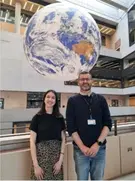
We are delighted to announce that the SYNLETT Best Paper Award 2025 is being awarded to Kazuteru Usui and Go Hirai and colleagues at Kyushu University (Japan) for their article “Stereoselective Synthesis of C-Aryl-α-Glycosides by Reductive C(sp2)–C(sp3) Cross-Coupling Reaction“. 

In announcing the selection, Debrabati Maiti, Editor-in-Chief of SYNLETT, stated: “This manuscript was selected as the “Best Paper” for its elegant integration of modern photoredox catalysis with nickel-mediated cross-coupling to address a long-standing challenge in carbohydrate chemistry. The award is presented to Kazuteru Usui and Go Hirai for the development of a highly α-selective and broadly applicable synthesis of C-aryl glycosides from readily available glycosyl bromides and aryl bromides. The work is distinguished by its conceptual clarity, mild reaction conditions, and strong emphasis on stereochemical control without reliance on pre-functionalized organometallic reagents.The synthetic strategy combines photoredox activation, silyl-radical-mediated halogen atom transfer, and nickel-catalyzed reductive cross-electrophile coupling into a streamlined and operationally simple protocol. The use of conformationally restricted glycosyl bromides enables exceptional α-stereoselectivity across a wide substrate scope, including glucosyl-, galactosyl-, and mannosyl donors, as well as heteroaryl and amino-acid-derived aryl bromides. This study provides a robust and mechanistically insightful platform for the synthesis of C-aryl glycosides, bridging fundamental radical chemistry with practical synthetic design and offering valuable tools for chemical biology and medicinal chemistry applications.” 

Buse Sonmez and David Palomas

Congratulations to the Sustainability & Circularity NOW SCNOW Outstanding Paper Award Winner! 

We are pleased to announce the winner of the inaugural Sustainability & Circularity NOW SCNOW Outstanding Paper Award, recognizing excellence among papers published in the journal over the past year.

Winning Paper 
Problem-Based Learning in Sustainable Chemistry: A Student Startup Model with PET as a Case Study
DOI: 10.1055/a-2761-3976 
Part of the Special Issue: Molecular Approaches and Systemic Changes: Green Chemistry Education for a Sustainable Future

Authors 
David Palomas, University College London (United Kingdom of Great Britain and Northern Ireland) 
Buse Sonmez, University College London (United Kingdom of Great Britain and Northern Ireland)

This outstanding contribution was selected by the Editorial Board for its significant impact on sustainability and circularity research, particularly in the area of education.

In announcing the selection, Anant Kapdi and Vania Gomes Zuin Zeidler, Editors-in-Chief of Sustainability & Circularity NOW (SCNOW), stated: 

“This manuscript was selected as the ‘SCNOW Outstanding Paper’ for its significant contribution to the field of sustainability and circularity, with a particular focus on education. The paper effectively demonstrates how the “Problem-Based Learning” model, developed by students, offers a flexible and powerful approach to teach sustainable chemistry, with the potential to transform the way we prepare future chemists to address today’s urgent scientific challenges.”

We warmly congratulate the authors on this well-deserved recognition and look forward to continuing to highlight outstanding research advancing sustainable and circular science.

2024 Winners

SynOpen Most Innovative Paper Awards Winner 2024

Congratulations to the SynOpen Most Innovative Paper Award Winners 2024!
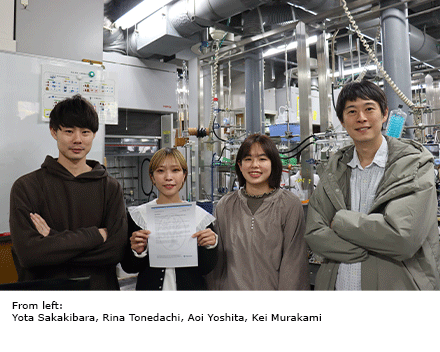
It is our great pleasure to announce that the SynOpen Best Paper Award 2024 is being awarded to Benjamin Stokes and co-workers at Santa Clara University (USA) for their publication Pd-Catalyzed Transfer Hydrogenation of Alkenes Using Tetrahydroxydiboron as the Sole Hydrogen Donor.

In announcing the selection, Thierry Ollevier, Editor-in-Chief of SynOpen, commented: "The development of new transition-metal-catalyzed hydrogenation conditions is especially important for pharmaceutical and fine chemistry in general. The publication of Professor Stokes and co-workers describes the palladium-catalyzed transfer hydrogenation of alkenes using tetrahydroxydiboron as the sole hydrogen donor. The reaction mediated by palladium(II) acetate as a convenient precatalyst and run in mild conditions was successfully applied to a variety of alkenes to afford the corresponding alkanes in high yields. The results reported in this SynOpen Most Innovative Paper 2024 will be very instructive for the future development of other atom-economical hydrogenation processes. The scientific value of the publication was pointed out, but also the quality and the clarity of its presentation. It is an excellent contribution that we are proud to have published in SynOpen."

SYNTHESIS Best Paper Awards Winner 2024

Congratulations to the SYNTHESIS Best Paper Award Winners 2024!
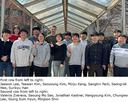
It is our great pleasure to announce that the SYNTHESIS Best Paper Award 2024 is being awarded to Yota Sakakibara, Kei Murakami and co-workers at Kwansei Gakuin University and JST PRESTO (Japan) for their paper Photoredox-Enabled Synthesis of a-Alkylated Alkenylammonium Salts, which was included in the Special Issue PSRC-10 (10th Pacific Symposium on Radical Chemistry).

In revealing this year’s winning paper, Mark Lautens, Editor-in-Chief of SYNTHESIS, wrote: “The publication of Professor Murakami and co-workers outlines an interesting use of ammonium salts containing a vinyl bromide as a reagent for addition to 1,1-diaryl ethylenes. Reaction occurs under photoredox conditions and offers a way to preserve and directly use ammonium salts in novel reactions. As one editor put it, “ammonium salts are a somewhat forgotten group to carry through many classes of reactions.” Murakami is changing that perspective with this excellent contribution.”

SYNLETT Best Paper Awards Winner 2024

Congratulations to the SYNLETT Best Paper Award Winners 2024!

We are delighted to announce that the SYNLETT Best Paper Award 2024 is being awarded to Sunkyu Han and co-workers at Korea Advanced Institute of Science and Technology (KAIST) for their article Total Synthesis of 4a-Hydroxyallosecurinine and Securingine F, Securinega Alkaloids with a C4-Hydroxy Handle for Biofunctional Derivatizations, which was published as part of the Cluster Biomimetic Synthesis.

In announcing the selection, Debrabati Maiti, Editor-in-Chief of SYNLETT, stated: “This manuscript was selected as the "best paper" for its significant contribution to natural product synthesis.It reports the first total syntheses of 4¢-hydroxyallosecurinine and securingine F, complex securinega alkaloids with promising biological activity. The authors address the challenge of the lack of functional handles in these alkaloids by strategically introducing a hydroxy group at the C4 position. Their elegant synthetic route features key transformations like a stereoselective aza-Michael addition, a creative HAT-mediated C2 epimerization, and an efficient 1,2-amine shift. They further streamlined the synthesis with a one-pot Mitsunobu-based approach. This work enables future biofunctional derivatizations for target identification and ADC development, opening new avenues for research in this important area. The manuscript is well-written and clearly presented, showcasing the authors’ technical expertise and the broad potential of their methodology.”