Chemistry Awards

Thieme–IUPAC Prize

Scientist standing in lab with arms crossed.

Call For Nominations

The Thieme Group in collaboration with IUPAC and the Editors of SYNTHESIS, SYNLETT, SYNFACTS, and Science of Synthesis announce the Thieme–IUPAC Prize for 2026. This award is presented every two years on the occasion of the International Union of Pure and Applied Chemistry – International Conference on Organic Synthesis (IUPAC–ICOS). It includes an award of €5,000.

Be part of the Thieme–IUPAC Prize!

General Principles:

  • In an update to previous editions of the award, the 2026 Thieme–IUPAC Prize will be presented to a scientist who must be within the first 15 years of their independent reserach career.
  • The candidate’s research must have had a major impact in synthetic organic chemistry.
  • The prize will be awarded based on scientific merit for independent research dealing with synthesis in the broadest context of organic chemistry, including organometallic chemistry, medicinal and biological chemistry.

Nomination:

Proposals must be accompanied by:

  • A biographical sketch of the nominee
  • A list of the candidate’s ten most significant publications
  • A statement of how the candidate’s research has had a major impact on the field of synthetic organic chemistry
  • The material will be confidentially forwarded to an independent selection committee.

Hall Of Fame

  • 2026 Winner
  • 2024 Winner

About IUPAC:

The International Union of Pure and Applied Chemistry (IUPAC) serves to advance the worldwide aspects of the chemical sciences and to contribute to the application of chemistry in the service of mankind. As a scientific, international, non-governmental and objective body, IUPAC can address many global issues involving the chemical sciences.

IUPAC was formed in 1919 by chemists from industry and academia. For ten decades, the Union has succeeded in fostering worldwide communications in the chemical sciences and in uniting academic, industrial and public sector chemistry in a common language. IUPAC has long been recognized as the world authority on chemical nomenclature, terminology, standardized methods for measurement, atomic weights and many other critically evaluated data. The Union continues to sponsor major international meetings that range from specialized scientific symposia to CHEMRAWN meetings with societal impact. During the Cold War, IUPAC became an important instrument for maintaining technical dialogue among scientists throughout the world.

IUPAC is an association of bodies, National Adhering Organizations, which represent the chemists of different member countries. There are 54 National Adhering Organizations, and two other countries are also linked to IUPAC in the status of Associate National Adhering Organizations. More than 2.000 chemists throughout the world are engaged on a voluntary basis in the scientific work of IUPAC, primarily through projects, which are components of eight Divisions and several other Committees.

Divisons:

  1. Physical and Biophysical Chemistry
  2. Inorganic Chemistry
  3. Organic and Biomolecular Chemistry
  4. Polymer
  5. Analytical Chemistry
  6. Chemistry and the Environment
  7. Chemistry and Human Health
  8. Chemical Nomenclature and Structure Representation

2026 Winner

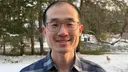
Portrait of Professor Song Lin

Song Lin is the Thieme–IUPAC Prize Winner 2026

Stuttgart, April 2026 – Thieme and the editors of SYNTHESIS, SYNLETT, SYNFACTS, and Science of Synthesis together with the International Union of Pure and Applied Chemistry (IUPAC) award Song Lin (Cornell University, USA) with the 2026 Thieme–IUPAC Prize in recognition of his pioneering work in electrochemical methods that are advancing organic synthesis and enabling more sustainable chemical processes.

Lin’s research focuses on the development of electrochemical and catalytic strategies for organic synthesis. His work has opened new pathways for forming chemical bonds under mild conditions and reduced reliance on hazardous reagents. By designing practical tools and methodologies, he has helped make electrochemical synthesis more accessible for both academic and industrial applications.

“In the short 10 years since initiating his independent program, Song Lin’s astonishing scientific output has proved him to be one of the most creative, innovative, and cross-disciplinary organic chemists of his generation. It will be very interesting to see the exciting directions Lin will take his program, and there is little doubt he will define the cutting edge of the field of reaction chemistry,” said Professor Erick Carreira, Chairman of the selection committee.

Song Lin studied at Peking University (China) and received his PhD from Harvard University under Professor Eric Jacobsen. After postdoctoral research with Professor Chris Chang at the University of California, Berkeley, he joined Cornell University in 2016, where he was promoted to Full Professor in 2023.

The Thieme–IUPAC Prize is awarded every two years to a scientist – within the first 15 years of an independent career – whose research has had a major impact on synthetic organic chemistry. Lin is the 17th recipient of the award which includes a prize of €5,000. The award ceremony will take place on July 7, 2026, at the 24th International Conference on Organic Synthesis (ICOS-24) in Lodz, Poland, where Lin will deliver the Thieme–IUPAC lecture. 

2024 Winner

Prof. Franziska Schoenebeck

Franziska Schoenebeck is the Thieme-IUPAC Prize Winner 2024

We are delighted to announce that the 2024 Thieme–IUPAC Prize has been awarded to Franziska Schoenebeck of RWTH Aachen University. Professor Schoenebeck becomes the 16th recipient of the prize, and joins a distinguished group of scientists whose research has had a major impact on the field of synthetic organic chemistry. The prize, which is awarded every two years and includes an award of € 5000, will be presented to Franziska Schoenebeck at the ICOS-24 conference before her Thieme–IUPAC lecture.

We warmly congratulate Prof. Schoenebeck and look forward to hearing about the latest developments from her laboratories!

About Prof. Franziska Schoenebeck
Following undergraduate studies in Berlin and Glasgow, Franziska Schoenebeck then obtained a PhD from the University of Strathclyde under the supervision of Prof. John A. Murphy. She then spent time as a Research Fellow in the group of Prof. K. N. Houk at UCLA, before joining the faculty of the ETH, Zurich, as Assistant Professor in 2010. In 2013 she moved to her current institution, RWTH Aachen University, achieving promotion to full Professor in 2016.

Franziska Schoenebeck is leading an internationally recognized research program at the interface of organic synthesis, homogeneous catalysis, and physical organic chemistry and uniquely combines a cutting-edge synthetic organic chemistry program with state-of-the-art computational and mechanistic studies. Her group has made pioneering contributions in diverse areas such as the use of organogermanes in synthesis and catalysis, the development of efficient methods for the trifluoromethylation of nitrogen groups, and the application of machine learning in the study and development of dinuclear metal complex catalysts.

Read more about her research